
Visit our sister brands




Choosing care for a loved one is a big decision, and understanding the cost is an important part of it. But when comparing live-in care with a care home, the weekly price only tells part of the story,
The right option depends on the support someone needs, their circumstances and the quality of life they want to maintain.
Both options can involve a significant financial commitment, but the costs vary depending on location, care requirements and the level of support needed.
In England, the average weekly fee paid by local authorities for a care home without nursing for people aged 65 and over was £956 in 2025/26. This is a council-funded fee benchmark, not necessarily the price a self-funding family with pay.
Live-in care costs depend on the individual package, including the hours of support required, the complexity of care and whether additional carers are needed.
The key is to compare what each option includes, rather than looking at the headline price alone.
Live-in care
With live-in care, a dedicated carer lives in the person's home and provides tailored support around their needs and daily routines.
Costs may include:
Household expenses, such as food, utilities and home maintenance, also remain the responsibility of the person living at home.
Care home
A care home provides accommodation alongside care and support, with staff supporting multiple residents.
Feed may cover:
Additional charges may apply for certain services, personal items or enhanced care requirements, so it is important to check exactly what is included.
The answer depends on the person and their needs.
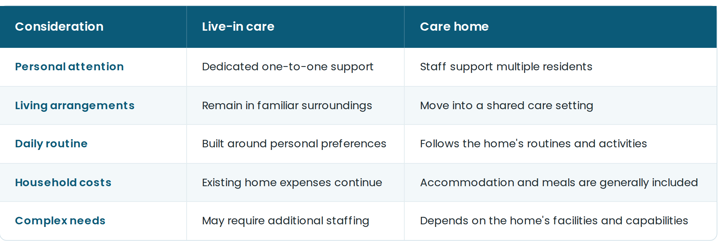
For someone who values independence, familiar surroundings and personalised support, live-in care may offer excellent value beyond the financial cost.
For someone who would benefit from shared facilities, organised group activities or a particular level of nursing care, a care home may be the better fit.
For couples who both need support, live-in care is worth exploring.
Rather than paying separate care homes fees for two people, one live-in care arrangement may be able to support both individuals. However, this depends on their needs, the level of assistance required and whether additional staffing is necessary.
Always request an assessment and a tailored quote before assuming one option with be cheaper.
Before making a decision, ask for these four questions:
It is also worth exploring whether any local authority funding, NHS Continuing Healthcare or other financial support may be available. Eligibility depends on individual circumstances.
There is no universal answer to whether live-in care or a care home is cheaper. The most suitable option is one that meets your loved one's needs, provides safe and appropriate support, and fits within the available budget.
At Banquo, we provide tailored live-in care designed around each person's needs, preferences and goals, helping them remain in the comfort of their own home wherever appropriate.
Considering live-in care? Speak to our team to discuss your requirements and arrange a personalised assessment.
Explore Banquo's live-in care services.

What does a Domiciliary Care Worker do? Domiciliary Care Workers, also known as home carers, assist with essential daily activities such as personal care, medication management, and household tasks...
Read
Children's Support Workers provide hands-on care, from assisting with daily routines and school activities to offering emotional support during challenging times. They help children develop life sk...
Read
Young Adult Support Workers assist with developing life skills, offering emotional support, and providing practical help with daily tasks such as budgeting, personal care, and job readiness. Whethe...
Read