
Visit our sister brands


Leaving hospital is an important step towards recovery, but getting the right support in place at home can take planning. Whether your loved one needs help with everyday tasks, personal care or ongoing support while they recover, knowing what to arrange before they return home can make the transition easier.
If you're arranging care after a hospital discharge, this checklist will help you understand what to ask, what to prepare and where to find support.
Before your loved one leaves hospital, speak to the ward team about their recovery, care needs and any support required at home. If further care is needed, ask for a discharge plan that explains what has been arranged and who is responsible for coordinating it.
Ask the team:
Will they need help with washing, dressing, meals or moving around?
Are any nursing visits, physiotherapy or occupational therapy required?
Who should you contact if the arrangements are delayed or something changes?
Are follow-up appointments already booked?
With your loved one's permission, you can be involved in these discussions and help make sure their needs and preferences are understood.
The right support will depend on your loved one's health, mobility and level of independence. Some people need temporary help while they regain their strength, while others may need ongoing care.
Options may include:
Reablement or intermediate care: Short-term support to help someone recover, rebuild confidence and regain independence.
Home care: A care worker visits to help with personal care, meals, dressing, and everyday activities.
Live-in care: A carer stays in the home to provide ongoing support and companionship where this is suitable for the person’s needs.
Community healthcare: Nurses, physiotherapists or other professionals provide clinical care or rehabilitation as required.
Residential or nursing care: If returning home is not suitable, a care home may offer the right level of support.
Ask the discharge team which services are being arranged and whether additional private care may be needed. NHS-funded recovery support may be available following an assessment, so check what your loved one is eligible for before making longer-term arrangements.
A home that felt easy to manage before a hospital stay may present new challenges during recovery. Small changes can make everyday activities safer and more comfortable.
Use this checklist to prepare:
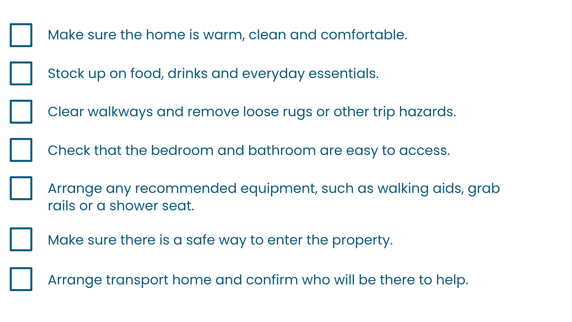
If you're unsure whether the home is suitable, ask about an occupational therapy assessment. This can help identify equipment or adaptations that may support safer movement and greater independence.
Your loved one may leave hospital with new medication, changes to existing prescriptions or instructions for wound care and recovery. Make sure you understand what needs to happen once they're home.
Make sure you receive the discharge information for their GP and understand any instructions given by the hospital team. If you're unsure about medication, speak to a pharmacist of the relevant healthcare professional rather than guessing.
Family members often help after a hospital stay, but it's important to be realistic about what you can provide. Your loved one may need support at times when you're working, sleeping or managing other responsibilities.
If they need more help than family can provide, arranging professional home care can help fill the gaps. Depending on the assessment and care provider, support might involve short daily visits, help at particular times of day or more continuous care.
Discuss any concerns with the discharge team before your loved one leaves hospital. If their needs change once they're home, contact the relevant healthcare professional or local authority to discuss a reassessment.
Not all care after a hospital discharge is funded in the same way. Some people qualify for NHS-funded services or short-term recovery support, while longer-term social care may involve a local authority assessment and a financial assessment.
If you're considering privately arranged care, ask providers for a clear breakdown of costs and what is included.
It's worth checking:
Don't assume that all care will be free or that you must pay for everything yourself. Eligibility depends on individual circumstances, so seek advice from the hospital discharge team, local authority or relevant NHS service.
Once your loved one is home, make sure everyone knows where to turn if something goes wrong or needs change.
Keep a list of important contact details, including:
If their condition worsens or your care concerned about their recovery, seek medical advice promptly. Call NHS 111 for urgent medical advice when appropriate, or 999 for a life-threatening emergency.
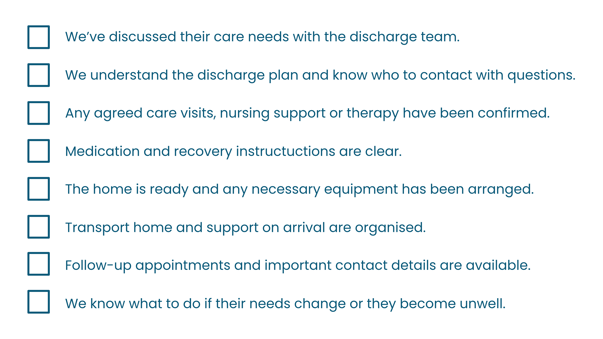
If something important is missing or you're worries that your loved on won't be safe at home, raise this with the hospital team before discharge.
Arranging care after a hospital discharge can feel like a lot to manage, particularly when you're also worried about someone you love. Taking the time to understand their needs, prepare the home and confirm the right support can make the transition more manageable.
Remember that you don't have to organise everything alone. Speak to the hospital discharge team about available services, ask your local authority about social care assessments and explore professional home care if your loved one needs additional help.
The right support can help them recover with greater comfort, dignity and independence, while giving family members more confidence in the care being provided.

What does a Domiciliary Care Worker do? Domiciliary Care Workers, also known as home carers, assist with essential daily activities such as personal care, medication management, and household tasks...
Read
Children's Support Workers provide hands-on care, from assisting with daily routines and school activities to offering emotional support during challenging times. They help children develop life sk...
Read
Young Adult Support Workers assist with developing life skills, offering emotional support, and providing practical help with daily tasks such as budgeting, personal care, and job readiness. Whethe...
Read
Comparing live-in care with a care home? Discover the real costs, what’s included in the fees and the key factors to consider when choosing the right care for your loved one.
Read
Explore the different ways to fund care at home, from self-funding and council support to NHS Continuing Healthcare and Direct Payments. Understand your options and find the right financial support...
Read